
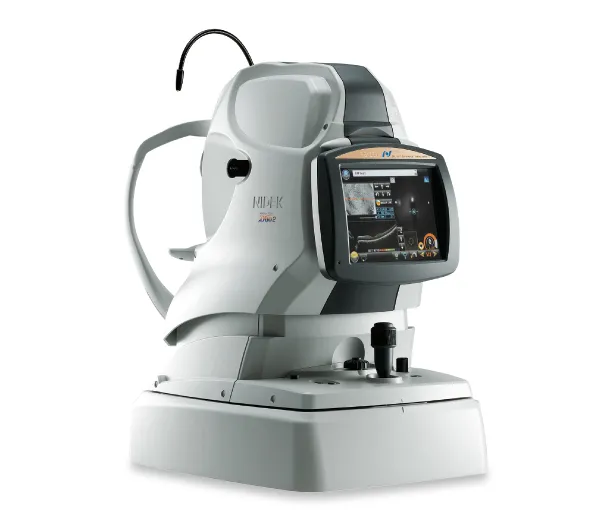
What is Optical Coherence Tomography (OCT)?
Optical coherence tomography (OCT) is a non-invasive imaging test that uses light waves to take cross-section pictures of your retina.
With an OCT scan, I am able to see each of the retina’s distinctive layers. This allows comparisons to be made with measurements of their thickness between the eyes, comparison to a normative database, and comparison over time once you’ve done a baseline scan. These measurements help with diagnosis. They also provide treatment guidance for glaucoma and diseases of the retina, including age-related macular degeneration (AMD) and diabetic eye disease.
Why did I invest in my own OCT machine?
I like to be as thorough as I can when assessing a patient’s eye health. A large proportion of my patients come referred from GPs and often present with more complex eye issues. Instead of referring patients off to imaging centres or ophthalmologists (eye specialists), investing in this equipment allows me to more efficiently assess the eye health of patients, determining how serious an eye condition is, often saving the patient time and unnecessary expense.
Why do an OCT scan?
This scan is a great tool to detect diseases much earlier than with a general eye examination without imaging. It has the ability to look beneath the surface of the retina in a cross-sectional way, allowing us to assess the architecture and gauge a deeper understanding of why vision may not be 100%.
Some examples of when it is useful:
- Drug toxicity screening
- Diabetes (for bleeding or leakage)
- Glaucoma (early detection and monitoring for progression)
- Myopia (earlier detection of glaucoma and associated macular disease)
- Macular Degeneration (early detection of deposits / drusen, or haemorrhaging)
What is the cost of an OCT scan?
Optometry and ophthalmology practices will charge up to $150 for this scan. At Carina Eye Care, the fee is $60 (pensioners pay a discounted rate of $40), and it is incorporated into the cost of an initial comprehensive eye exam.
Does private health insurance cover the costs of an OCT scan?
Some do, some don’t. It doesn’t come out of your optical cover, so it’s mostly separate and additional to the amount that you get for your glasses and contact lenses. It may be a good idea to contact your health fund directly. Funds that have been known to cover OCT include:
- Defence Health
- St Luke’s
- Westfund
- AHM
- Medibank
- CBHS (90%)
- Peoplecare
- CUA Health
- HCI
How often should I have my OCT scan reviewed?
- Closely monitored conditions: every 2–3 months
- Glaucoma suspect or early macular degeneration: every 3–12 months
- Monitoring retinal lesions: every 3–12 months
- General monitoring: every 12 months to 2 years
How long does an OCT scan take?
The measurement is done at Carina Eye Care using an advanced Nidek OCT machine. You simply look at the green light, I focus the machine, the machine makes a few noises, and the scans are taken within a few seconds. Often, several different scans will be done to investigate the macula, optic nerve, retina, and to take a high quality retinal photo. In total, this may take about 5 minutes to complete.

15 years of experience as an optometrist and owner of Carina Eye Care, experienced in prescribing the full range of myopia management options.
Written and medically reviewed by Dr Carina Trinh, BOptom · AHPRA Registered (OPT0001663121) · Optometry Australia Member · CCLSA Member · OSO Member · IOA Member.