
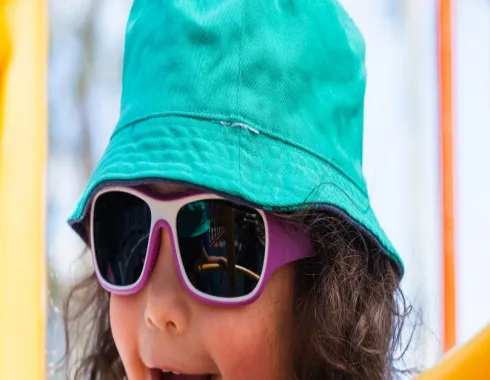
Australia has the highest incidence of skin cancers in the world, 10% of which occur on the skin around the eyes. Exposure to UV radiation, particularly during childhood and adolescence, is related to 99% of non-melanoma skin cancers and is the greatest risk factor in their development.
Aussie parents are great at ensuring their kids are covered with a hat and sunscreen. However, there is a lack of understanding around eye protection, and unfortunately, parents tend to give in to “my child won’t wear sunglasses, she doesn’t like them” at a time when their eyes are most vulnerable to UV damage.
30% of Australian children already have signs of UV damage by the age of 12–15. It is crucial to protect your children’s eyes from a young age.
How does UV enter the eyes?
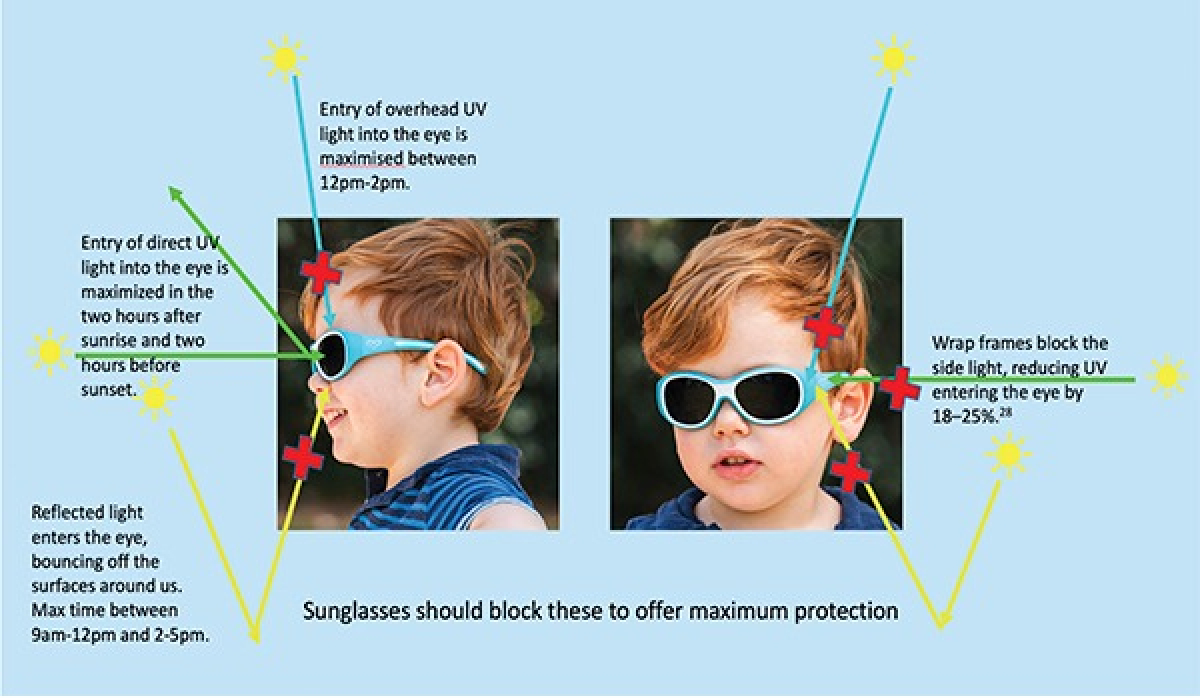
UV light reaches the eyes in three ways:
- Directly, typically when the sun is lower in the sky, 2 hours after sunrise and 2 hours before sunset
- Reflected light, off surfaces such as water and snow, as well as from cloudy days with increased UV scatter
- Overhead, during the middle of the day, 12pm–2pm
Children have larger pupils and immature lenses that allow more UV through to the eye and onto the macula. Children also receive approximately three times the annual adult dose of UV radiation as they spend more time outside. UV penetration through the eye is maximal between the ages of zero and 2 years, making early protection critical.
What are the best sunglasses for UV protection?
Not all sunglasses are created equal. Here’s what to look for:
Wrap frames, Flat sunglass frames do not provide the same protection as wrap frames, as they don’t protect the eyes from light entering from above and the side. A wraparound style significantly reduces peripheral UV exposure.
Back surface antireflective coating, This blocks reflected light from entering the eye through the back of the lens, which is a commonly overlooked source of UV exposure.
Quality lenses rated UV400, UV400 lenses block 99–100% of both UVA and UVB radiation. Always check for this rating before purchasing.
If your child resists wearing sunglasses, try involving them in choosing their own pair, having a frame they like makes them far more likely to wear it consistently.
15 years of experience as an optometrist and owner of Carina Eye Care, experienced in prescribing the full range of myopia management options.
Written and medically reviewed by Dr Carina Trinh, BOptom · AHPRA Registered (OPT0001663121) · Optometry Australia Member · CCLSA Member · OSO Member · IOA Member.